
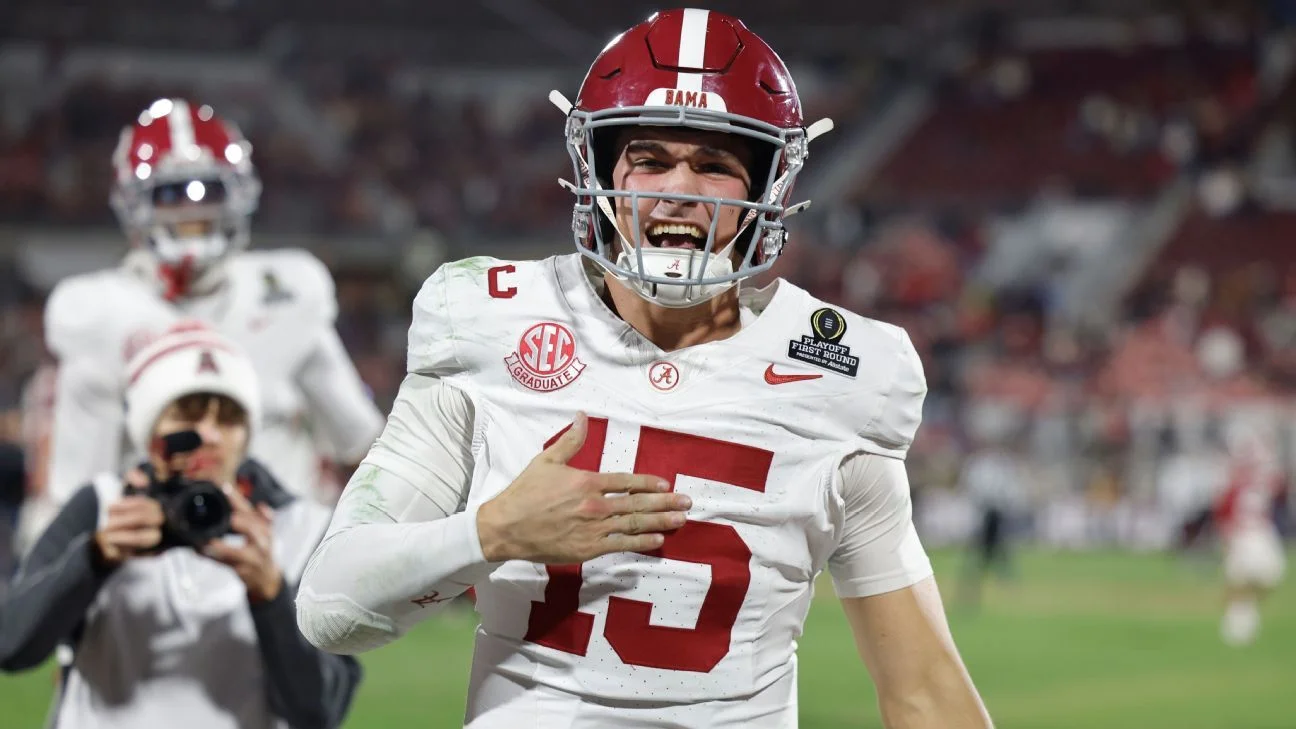
Draft-bound Ty Simpson: New school would have hurt Bama legacyTy Simpson’s decision to enter the NFL draft, even without guaranteed first-round status, speaks volumes about legacy, loyalty, and the evolving landscape of college football.
His recent statement that transferring to another school would “tarnish my legacy” after playing for Alabama underscores a commitment often lost in the current era of rampant player movement.
This isn’t just about one player’s choice; it’s a window into the complex considerations student-athletes face, balancing personal ambition with institutional pride.
Simpson’s journey at Alabama wasn’t exactly a fairy tale.
He arrived with high expectations, a touted recruit ready to take the reins.
However, the quarterback room in Tuscaloosa is perpetually crowded, and opportunities were limited.
Many in his position might have jumped ship the moment the transfer portal beckoned, seeking immediate playing time and a chance to showcase their talents elsewhere.
That’s the norm now, a quick fix for stalled careers.
But Simpson chose a different path, one rooted in the values of staying true to the program that initially believed in him.
He could have chased the spotlight at a smaller school, padded his stats, and potentially improved his draft stock.
However, the Alabama connection, the lessons learned under Nick Saban, and the Crimson Tide brotherhood clearly held more weight for him.
He’s betting on his potential and the Alabama pedigree to impress NFL scouts.
The dynamics of college football have drastically changed, especially with the advent of the transfer portal and Name, Image, and Likeness (NIL) deals.
Players are now essentially free agents, able to switch schools with relative ease and monetize their personal brands.
While this provides more power to the athletes, it also arguably diminishes the sense of tradition and commitment that once defined college sports.
Simpson’s decision feels like a throwback to a different era, a reminder that some athletes still prioritize loyalty and legacy over immediate gratification.
This decision also highlights the pressure cooker environment of a program like Alabama.
Playing behind established stars, especially at quarterback, demands immense patience and unwavering dedication.
Simpson’s choice suggests he understood the long game, recognizing the value of developing his skills within a top-tier program, even if it meant limited playing time.
He now enters the draft process with the backing of one of college football’s most respected institutions.
Ultimately, Ty Simpson’s choice is a calculated risk, a gamble on his own abilities and the enduring power of the Alabama brand.
Whether it pays off remains to be seen.
But his decision serves as a compelling narrative in a sport increasingly defined by fleeting allegiances, reminding us that legacy and loyalty still hold value for some.
He’s betting that NFL teams will see the same potential that Alabama saw in him, and that the lessons he learned in Tuscaloosa will translate to success at the next level.